


Imagine opening ChatGPT and asking it for the recipe for a well-spiced traditional dish, and it replies with an expression typical of our home, with our local humor and our accent.
We all want artificial intelligence that truly understands us, an AI that grasps our jokes, our culture, and our unique way of speaking. But despite the enormous global enthusiasm for AI, creating a 100% Tunisian model remains a colossal challenge.
Why can’t we simply build our own “Tunisian ChatGPT”? It all comes down to a mix of chaotic online writing, exorbitant costs, and the fact that robots simply don’t understand our sarcasm. Let’s decrypt all of this.
1. The Data Dilemma: We don’t have enough words online
AI is like a super-intelligent child. To learn a language, it needs to read billions of words. Large companies have trained their models by making them “read” half of the internet - books, articles, and websites primarily in English.
Here’s the problem: The Tunisian dialect is primarily spoken, not written. When we write it online, it’s a chaotic mix of Latin letters, numbers, French, and English. Think about it: how do you spell a simple interrogative word in a text message? Everyone uses their own combination of letters and numbers.
If we can’t even agree on the spelling of our own words, how is a robot supposed to learn the rules?
What AI actually has to read online
AI models are hungry for Tunisian content. Here’s a glimpse of what they actually consume on the web.
You cannot build a massive artificial brain using only a few thousand misspelled social media comments and captions.
2. The Exorbitant Bill
Building an AI from scratch is not like creating a standard mobile application. It requires massive supercomputers, the size of a warehouse, filled with ultra-powerful and extremely expensive chips.
Tech giants spend hundreds of millions of dollars just to pay for the electricity and hardware needed to train their AI. For a local project intended only for our population, finding that kind of funding is incredibly difficult.
The Reality of AI in Numbers
Let’s compare what it takes to build these models:
| What we compare | Global AI (ChatGPT Type) | Regional AI (Middle East) | The Tunisian AI Dream |
|---|---|---|---|
| Creation Cost | 50 to over 100 million dollars | 2 to 10 million dollars | $500,000 and up (Just to start) |
| What it reads to learn | Trillions of perfect sentences | News, encyclopedias, formal books | Draft texts, memes, and mixed languages |
| Supercomputers needed | Over 10,000 cutting-edge chips | Over 1,000 chips | Hundreds of chips (Difficult to import) |
| Does it understand our jokes? | Not at all | Barely | Yes (in theory!) |
3. Robots Don’t Understand Tunisian Sarcasm
Tunisians are world champions of code-switching: we start a sentence in our mother tongue, add a verb in French, and finish with a slang word in English.
Current AI models are too rigid for this. If an AI is trained on ultra-classical and formal language, it will speak like a TV news anchor. It will completely miss the sarcasm, hidden meanings, and cultural flavor of a real Tunisian conversation.
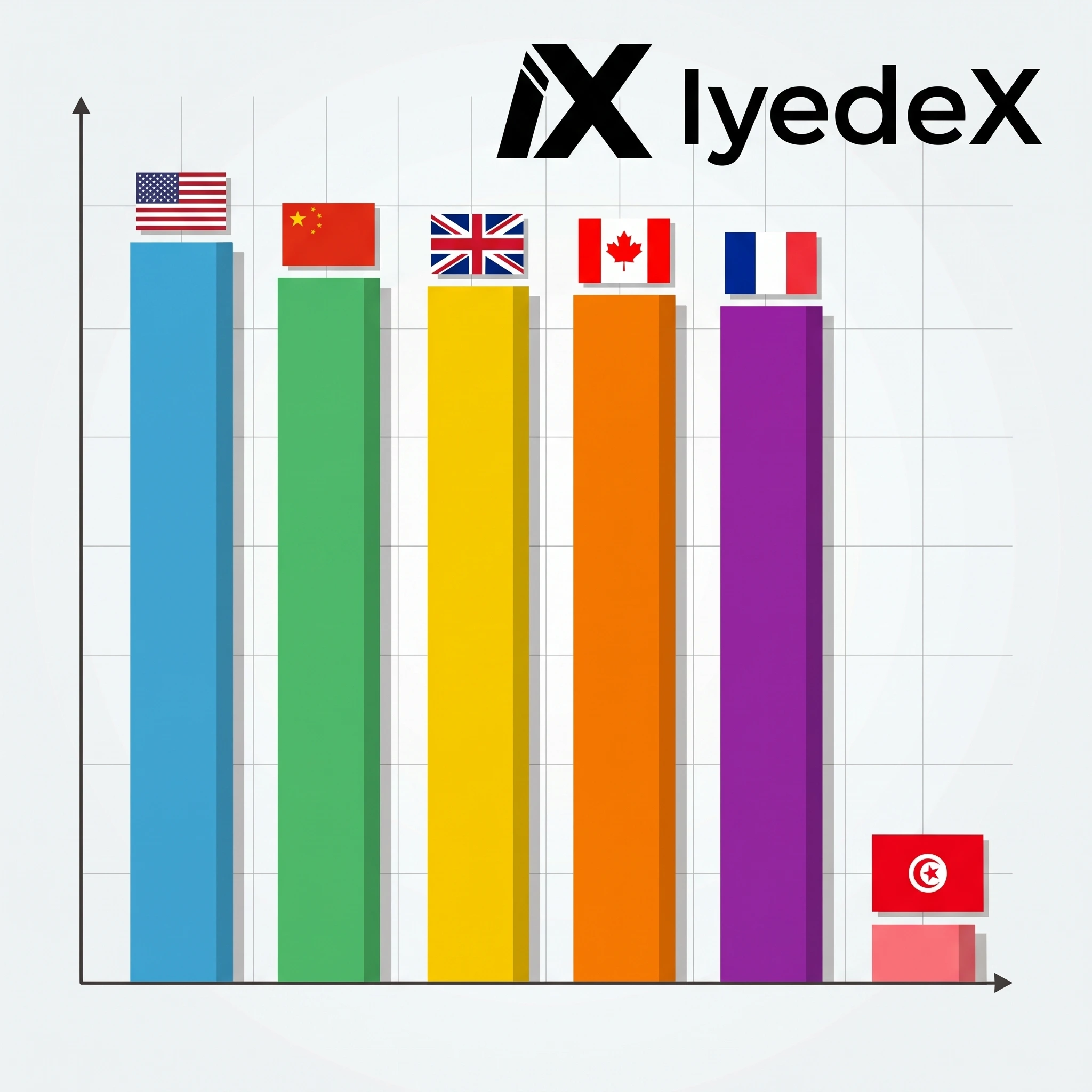
(As the chart shows, AI is super intelligent in English, but completely lost when faced with our slang or sarcasm).
So, are we condemned to speak to robots formally?
Not exactly! We don’t need to build a multi-million dollar AI from scratch.
The smartest strategy for Tunisia is to take an existing, free, and open-source AI, and send it to a Tunisian school. By gathering clean and organized data, such as transcriptions of Tunisian podcasts, plays, and radio shows, local developers can “fine-tune” these models to understand our dialect.
The technological talent already exists here and is ready to take on the challenge. We just need to start transforming our beautiful and chaotic dialect into data that machines can actually read.
Our Mission at IyedeX: Taking Action
This is exactly where our role at IyedeX comes in. We understood that we are unique, with a rich culture and a complex dialect, and that we need technology that truly resembles us. Our mission is to adapt AI to Tunisia so that it stops being a foreign concept and starts resonating with our daily lives.
That’s why we haven’t waited. We have already embarked on this decisive step by launching our very first product aimed at the general public (B2C): 3amAli. Through this launch, we have taken the first step to bring adapted artificial intelligence directly to Tunisians. We firmly believe that it is time to have an assistant who understands not only our words, but also our identity, our humor, and our culture.